
Choose the day's question
Jerusalem can hold a great many interests, which makes it tempting to put everything into one day. Start instead with a question: what does the family want to understand, celebrate or remember? A day focused on Jewish heritage will differ from one exploring Christian traditions, archaeology or contemporary neighbourhood life. A clear theme helps a guide choose what to include and what to leave for another visit.
Make the route fit the group
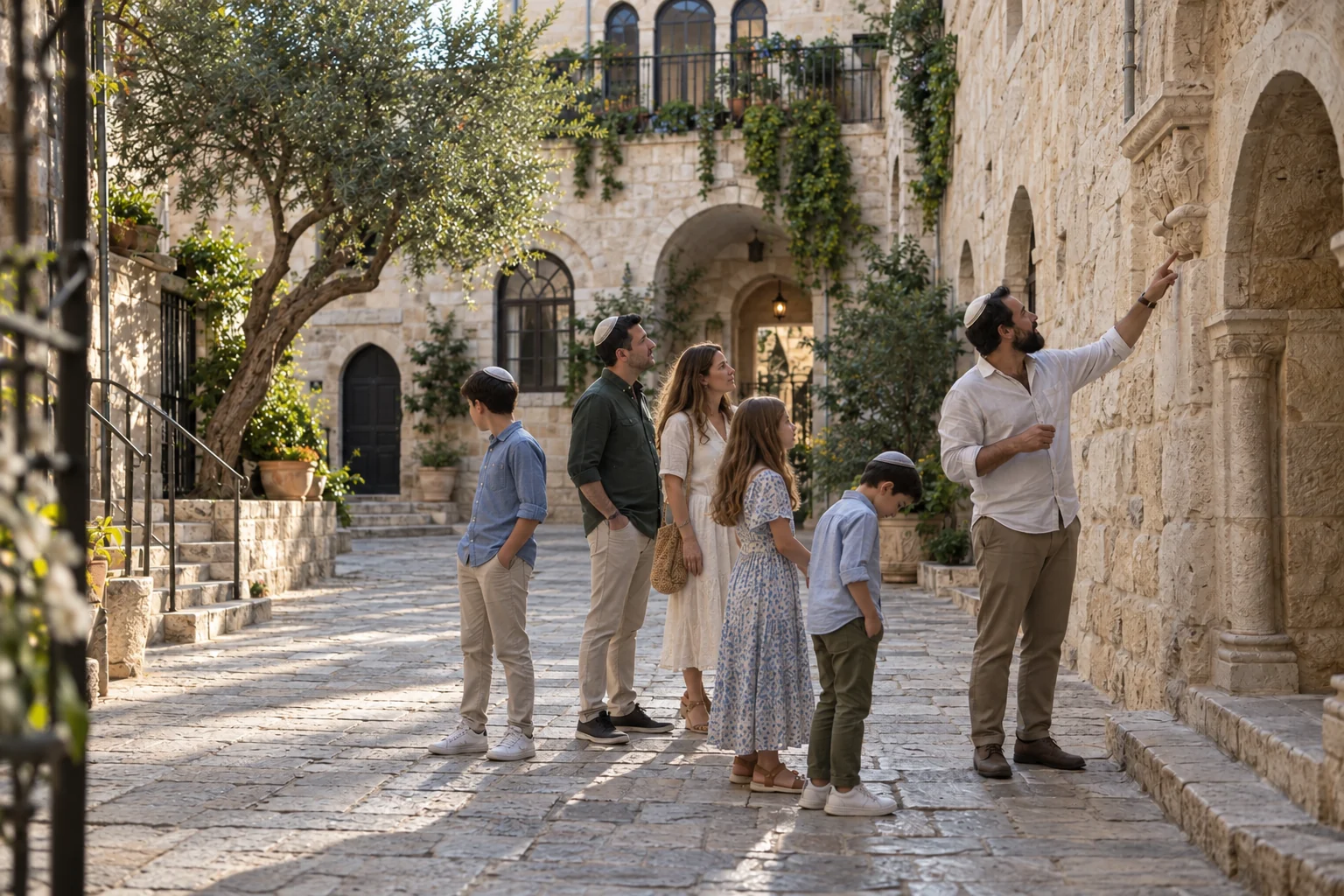
The Old City is experienced on the ground, not as a set of pins on a map. Consider walking surfaces, stairs, meeting points, toilets and the distance between the vehicle and the first stop. Check current access before departure and keep an alternative route available. A shorter, well-paced visit gives people more attention for the places they actually see.
Use a museum to open a conversation
The Israel Museum can add context through its archaeology collections, the Shrine of the Book and the Jerusalem model. Select a few objects or ideas connected to the group's interests. For a remembrance visit at Yad Vashem, choose the appropriate format and age range, then leave time afterwards. A powerful experience does not need to be followed immediately by another demanding stop.
Include the living city
A meal or a market encounter can bring the programme into the present. Mahane Yehuda offers a different lens on Jerusalem from a formal heritage visit. Choose the timing deliberately, check food requirements and decide whether the group wants a guided tasting experience or simply time to explore. The contrast can make the day's historical themes feel more connected to everyday life.
Know when to stop
Leave something for a return visit. A group that ends the afternoon engaged and curious has gained more than one that reaches every landmark but remembers only the rush. Build in a quiet pause, an unhurried lunch and a realistic return to the hotel. Religious-site rules, Shabbat, holidays and current local conditions belong in the planning from the start, so that flexibility feels natural rather than like a last-minute compromise.
Editorial guidance researched on 1 November 2026. Check the official source for current details.